
Products Detail
Key Features
Hollow Core Design: Reduces panel weight by up to 40-60% compared to solid GERC panels without compromising strength.
High Strength-to-Weight Ratio: Flexural strength ≥ 18 MPa ensures excellent resistance to bending and impact.
Durable & Weather-Resistant: UV stable, frost resistant, and able to withstand harsh environmental conditions.
Fire Resistant: Non-combustible material with A1 fire rating (EN 13501-1).
Easy Installation: Lightweight nature simplifies transport and installation, reducing labor costs.
Customizable: Available in various sizes, thicknesses, and surface textures to suit architectural requirements.
Technical Specifications
Property Typical Value
| Density | 1,600 – 1,900 kg/m³ |
| Flexural Strength | ≥18 MPa |
| Compressive Strength | ≥50 MPa |
| Fire Rating | A1 (EN 13501-1) |
| Panel Thickness | 20–40 mm (customizable) |
| Panel Size | Standard sizes 600×1200 mm or custom |
Decorative GRC Hollow Core Panels: A Comprehensive Guide for Modern Construction
In the evolving world of architecture and construction, the demand for materials that offer both functional performance and aesthetic appeal is growing rapidly. Among the most innovative materials gaining popularity is Glass Fiber Reinforced Concrete (GRC), particularly in the form of decorative GRC hollow core panels. These panels not only provide structural advantages but also offer a wide range of design possibilities, making them an ideal choice for modern buildings, facades, and interiors. In this article, we will explore the industry background, core concepts, manufacturing processes, applications, and current trends associated with decorative GRC hollow core panels.
The construction industry has seen significant changes in recent years, driven by urbanization, sustainability requirements, and technological advancements. As cities continue to grow, the demand for building materials that are lightweight, durable, and energy-efficient is increasing. In parallel, the need for materials that can enhance the visual appeal of buildings is also crucial. Decorative GRC Panels, including hollow core panels, have become a valuable solution, meeting both functional and aesthetic needs.
The demand for GRC hollow core panels has grown in response to the construction industry's evolving demands for sustainable and cost-effective materials. These panels address several critical needs, such as reducing the weight of building facades, enhancing insulation properties, and allowing greater flexibility in design and architectural expression. Hollow core panels, in particular, offer added benefits of reducing material usage and improving thermal insulation, making them ideal for environmentally-conscious building projects.
Additionally, the versatility of decorative GRC hollow core panels—with a range of customizable finishes and designs—has made them a popular choice for various applications, from residential buildings and commercial facades to public spaces and landscaping.
Decorative GRC hollow core panels are prefabricated panels made from a combination of Glass Fiber Reinforced Concrete (GRC) and a hollow core structure. GRC is a composite material made by combining fine aggregates, cement, water, and alkali-resistant glass fibers. These fibers reinforce the concrete, making it lightweight, durable, and resistant to cracking, while also improving its tensile strength.
The hollow core design is achieved by creating internal voids or cavities within the panel. These voids reduce the overall weight of the panel, which is crucial for large-scale architectural applications where reducing dead load is a priority. The hollow design also improves the thermal insulation properties of the panels, making them more energy-efficient compared to solid concrete panels.
The decorative aspect of these panels refers to the surface finish, which can be customized to achieve various textures, colors, and patterns. GRC is highly versatile in this regard, enabling the production of surfaces that mimic natural materials like stone, wood, or brick, or modern, custom designs that suit contemporary architecture.
The key benefit of the hollow core technology lies in its ability to reduce the weight of the panels without sacrificing strength or durability. This makes them easier to transport, handle, and install, reducing overall construction costs. The hollow design also offers improved sound insulation properties and can help with thermal performance, which is especially valuable in energy-efficient buildings.
The hollow core structure allows for more sustainable construction practices, as it minimizes the amount of raw material used. Additionally, the hollow spaces can be used for wiring, ducts, or other services, adding to the functionality of the panels in modern architectural designs.
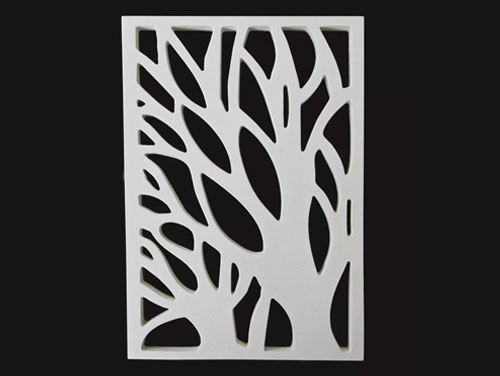
The primary material in decorative GRC hollow core panels is Glass Fiber Reinforced Concrete (GRC). This composite material combines:
Cement: Provides the primary binding agent for the concrete.
Fine Aggregates: These materials, such as sand or crushed stone, contribute to the concrete's mass and structure.
Glass Fibers: High-quality glass fibers are added to enhance the tensile strength of the concrete, making it more resistant to cracking and providing superior durability.
In addition to the basic GRC mix, various surface finishes and coatings can be applied to achieve specific aesthetic results, such as polished, sandblasted, or textured finishes. These finishes not only enhance the appearance of the panels but also add an extra layer of protection against environmental factors.
The manufacturing process for decorative GRC hollow core panels typically follows these steps:
Mixing: The materials—cement, aggregates, glass fibers, and water—are carefully mixed to create a uniform slurry. The mixture's consistency is crucial for ensuring the strength and durability of the final product.
Molding: The GRC mixture is poured into molds to form the desired panel shape. The hollow core is achieved by inserting spacers or using specialized molds that create internal voids during the casting process.
Curing: The panels are allowed to cure in a controlled environment, ensuring that the concrete hardens properly and gains the required strength.
Finishing: After curing, the panels are removed from the molds and undergo surface finishing processes, such as sandblasting, polishing, or painting. This step ensures the panels have the desired aesthetic quality and durability.
Quality Control: Each panel undergoes rigorous testing for strength, durability, and performance to meet industry standards before being delivered to the construction site.
Decorative GRC hollow core panels offer several performance advantages:
Lightweight: The hollow core design significantly reduces the weight of the panels compared to solid concrete, making them easier to transport and install.
Durability: The combination of GFRC and the hollow core structure provides excellent resistance to weathering, cracking, and impact.
Thermal and Sound Insulation: The hollow core enhances the panel's thermal and acoustic insulation properties, making them ideal for energy-efficient and noise-reducing applications.
Aesthetic Flexibility: The surface can be customized to create a variety of textures and finishes, offering design flexibility for different architectural styles.
Several factors influence the quality and performance of decorative GRC hollow core panels:
Material Quality: The quality of the cement, aggregates, and glass fibers used in the GRC mix directly affects the strength, durability, and overall performance of the panels.
Molding and Curing Process: Consistency in the molding and curing process ensures that the panels meet the required specifications for strength, weight, and finish. Variations in these processes can lead to defects or inconsistent quality.
Finishing Techniques: The finishing processes—such as sandblasting, polishing, or painting—must be executed with precision to ensure both aesthetic appeal and durability.
Environmental Resistance: The anti-weathering properties of the GRC panels are influenced by the materials used and the application of protective coatings. High-quality coatings can help prevent discoloration, corrosion, and degradation over time.
When choosing a supplier for decorative GRC hollow core panels, consider the following criteria:
Experience and Reputation: Work with suppliers who have a proven track record in GRC manufacturing and a solid understanding of architectural applications.
Customization Capabilities: Ensure that the supplier can accommodate the specific design requirements for size, finish, and performance.
Quality Assurance: The supplier should have a robust quality control process to ensure that all panels meet the required strength, aesthetic, and durability standards.
Delivery and Lead Time: Timely delivery is essential to avoid delays in the construction schedule. Suppliers should be able to meet deadlines without compromising on quality.
While decorative GRC hollow core panels offer numerous advantages, some challenges exist:
Cost Considerations: The initial cost of GRC hollow core panels may be higher than other materials due to the complexity of manufacturing and the use of specialized materials. However, the long-term benefits in terms of durability and performance often outweigh these initial costs.
Installation Complexity: Despite being lightweight, the installation of GRC panels requires careful handling and precise alignment to ensure proper fit and performance.
Maintenance: While GRC is low-maintenance, regular cleaning and inspection are still necessary to maintain the panels' appearance and performance, particularly in environments with high pollution levels.
Decorative GRC hollow core panels are versatile and can be used in a variety of applications:
Commercial Facades: These panels are ideal for office buildings, shopping malls, and public spaces where both durability and aesthetics are crucial.
Residential Buildings: In residential projects, they are used for exterior cladding, facades, and interior partition walls.
Infrastructure Projects: The lightweight and durable nature of these panels makes them suitable for use in infrastructure projects such as bridges, tunnels, and transport hubs.
Landscaping: Decorative GRC hollow core panels are also used in outdoor landscaping, including garden walls, decorative fences, and architectural features.
As demand for sustainable and energy-efficient construction materials grows, the GRC industry is evolving to meet these needs. Future developments in decorative GRC hollow core panels may include:
Increased Use of Recycled Materials: Sustainability will continue to be a key focus, with manufacturers exploring the use of recycled aggregates and fibers to create more eco-friendly panels.
Smart Materials: There may be a rise in the integration of smart materials, such as sensors, into GRC products to provide real-time monitoring of structural integrity and environmental conditions.
Enhanced Customization: Advances in 3D printing and digital fabrication techniques may allow for even more intricate and customized designs for decorative GRC hollow core panels.
Decorative GRC hollow core panels offer a versatile and durable solution for modern architectural applications. With their lightweight nature, customizable finishes, and superior performance, they are well-suited for a range of building types, from residential developments to large-scale commercial projects. As demand for energy-efficient, sustainable, and aesthetically pleasing building materials continues to grow, decorative GRC hollow core panels will play a key role in shaping the future of construction.
This website uses cookies to ensure you get the best experience on our website.

 Español
 Portugues
 Pусский
 Français
 Deutsch
 日本語
日本語 한국어
한국어 العربية
 Italiano
 Polski
 Türk dili
 Melayu
 中文
中文 қазақ
қазақ עִברִית
 українська
 norsk
norsk o'zbek
 ଓଡିଆ
ଓଡିଆ



 Phone
Phone