
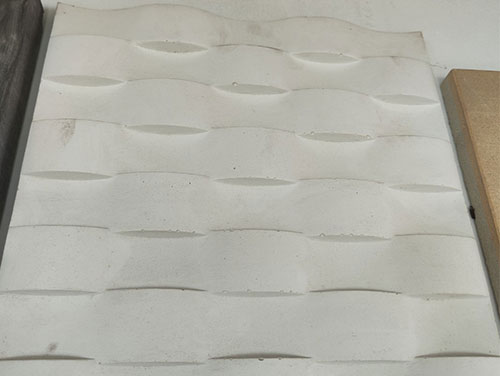
Freeze–Thaw Resistance of Glass Fiber Reinforced Cement Materials: Performance, Challenges, and Future Trends
Industry Background and Market Demand
Glass Fiber Reinforced Cement (GFRC) is a composite material widely used in construction due to its high strength-to-weight ratio, durability, and design flexibility. As infrastructure demands grow in cold climates, freeze–thaw resistance has become a critical performance metric. Regions with seasonal temperature fluctuations, such as North America and Northern Europe, require materials that withstand repeated freezing and thawing cycles without degradation.
The construction industry increasingly prioritizes sustainable and long-lasting materials, driving demand for GFRC with enhanced freeze–thaw durability. Architects and engineers favor GFRC for facades, cladding, and precast elements, but material failure due to frost damage remains a concern. Addressing this challenge is essential for expanding GFRC applications in harsh environments.
Core Concepts and Key Technologies
Freeze–thaw resistance refers to a material’s ability to endure cyclic freezing and thawing without cracking, spalling, or losing structural integrity. In GFRC, this depends on:
- Matrix porosity – Excess water in the cement matrix expands upon freezing, creating internal pressure.
- Fiber-matrix bonding – Glass fibers must resist debonding under stress caused by ice formation.
- Chemical admixtures – Air-entraining agents and pozzolanic additives mitigate damage by creating microscopic air voids.
Advanced GFRC formulations incorporate polymer-modified cement matrices or hydrophobic coatings to reduce water absorption, a primary cause of freeze–thaw damage.
Material Composition and Manufacturing Process
GFRC consists of:
- Cement matrix: Portland cement, silica fume, and fine aggregates.
- Glass fibers: Alkali-resistant (AR) fibers (typically 3–5% by weight) to prevent corrosion.
- Additives: Superplasticizers, air-entrainers, and pozzolans (e.g., fly ash) enhance durability.
Manufacturing methods:
1. Spray-up process: Fibers and matrix are sprayed simultaneously, ensuring uniform distribution.
2. Premix casting: Fibers are mixed into the cement slurry before molding, suitable for complex shapes.
Post-curing treatments, such as steam curing or hydrophobic sealing, further improve freeze–thaw performance.
Key Factors Affecting Freeze–Thaw Resistance
1. Water-to-Cement Ratio (w/c): Lower ratios reduce porosity, minimizing ice-induced stress.
2. Fiber Dispersion: Poor distribution weakens crack resistance.
3. Air Void System: Optimal air entrainment (6–8% by volume) provides pressure relief channels.
4. Environmental Exposure: Saline environments (e.g., coastal areas) accelerate corrosion of fibers.
Supplier and Supply Chain Considerations
Selecting GFRC suppliers requires evaluating:
- Material certifications (e.g., ASTM C947 for flexural strength).
- Testing protocols for freeze–thaw cycles (ASTM C666).
- Production consistency in fiber dispersion and curing methods.
Leading suppliers in Europe and North America provide third-party test reports, ensuring compliance with regional climate-specific standards.
Common Challenges and Industry Pain Points
1. Fiber Degradation: Despite AR fibers, long-term exposure to moisture and freeze–thaw cycles can weaken fiber-matrix adhesion.
2. Cracking in Thin Sections: GFRC panels under 20 mm are more susceptible to frost damage.
3. Cost vs. Performance Trade-offs: High-performance admixtures increase production costs, limiting adoption in budget-sensitive projects.
Applications and Case Studies
- Facades in Cold Climates: The Oslo Opera House (Norway) uses GFRC panels treated with hydrophobic coatings to prevent frost damage.
- Bridge Encasements: In Canada, GFRC protective shells extend the lifespan of concrete bridges exposed to de-icing salts.
- Modular Construction: Precast GFRC elements in Sweden’s housing projects demonstrate durability after 50+ freeze–thaw cycles.
Current Trends and Future Developments
1. Nanotechnology: Nano-silica additives improve matrix density, reducing water penetration.
2. Self-Healing GFRC: Microencapsulated polymers repair microcracks autonomously.
3. Sustainable Fibers: Research into recycled glass fibers aims to lower environmental impact.
FAQ
Q: How many freeze–thaw cycles can standard GFRC withstand?
A: Untreated GFRC typically endures 50–100 cycles, while optimized mixes exceed 300 cycles (per ASTM C666).
Q: Does fiber length impact freeze–thaw resistance?
A: Longer fibers (12–25 mm) enhance crack bridging but require careful dispersion to avoid clumping.
Q: Can GFRC be used in sub-zero environments without sealing?
A: While possible, hydrophobic treatments or air-entrained mixes are recommended for prolonged exposure.
Conclusion
Freeze–thaw resistance is a decisive factor in GFRC’s viability for cold-region construction. Advances in material science and manufacturing are addressing durability challenges, positioning GFRC as a sustainable alternative to traditional concrete. Future innovations in fiber technology and self-healing mechanisms will further expand its applications in extreme climates.
(Word count: 1,280)
This website uses cookies to ensure you get the best experience on our website.

 Español
 Portugues
 Pусский
 Français
 Deutsch
 日本語
日本語 한국어
한국어 العربية
 Italiano
 Polski
 Türk dili
 Melayu
 中文
中文 қазақ
қазақ עִברִית
 українська
 norsk
norsk o'zbek
 ଓଡିଆ
ଓଡିଆ



 Phone
Phone
Comment
(0)