
Using patented molding technology, we engineer millimeter-precise three-dimensional textures into UHPC surfaces—from rugged volcanic rock and handcrafted ceramic impressions to futuristic parametric reliefs. Every contour undergoes structural validation, ensuring artistic expression never compromises durability.
Tactile Innovation : Adjustable relief depth (0.2-15mm) for anti-slip functionality (static friction coefficient μ≥0.6) or pure artistic statement
Dual-Stage Craftsmanship : CNC-carved master molds → silicone transfers for edge fidelity → UHPC casting
Light Play Architect : Dynamic shadow patterns evolve with solar angles, giving facades a fourth dimension
Self-Cleaning : Open-texture design promotes rainwater runoff (60% less cleaning vs. smooth surfaces)
▸ Panel thickness: 8-50mm
▸ Texture accuracy: ±0.5mm tolerance
▸ Flexural strength: ≥18MPa (with deep textures)
▸ Weathering: Zero spalling after 300 freeze-thaw cycles
◈ Architectural cladding: Weightless alternative to dimensional stone
◈ Feature walls: Backlight-ready for dramatic shadow casting
◈ Urban furniture: Integrated anti-slip seating with wayfinding textures
Texture sourcing: 3D-scanned artifacts (heritage bricks/bark/fossils) or digital models
Functional hybrids: Texture grooves embedding snow-melt tubing or acoustic wool
Color interventions: Gradient dyes/metallic coatings (enhancing depth perception)
UHPC Texture Panels: Advanced Solutions for Modern Architectural Applications
Ultra-High-Performance Concrete (UHPC) texture panels are increasingly recognized as a transformative material in modern architecture and construction. Combining exceptional mechanical properties, durability, and design versatility, UHPC panels have become a preferred choice for architects, contractors, and engineers seeking both structural reliability and aesthetic appeal. These panels provide enhanced resistance to environmental stressors while offering intricate surface textures that elevate building facades, interior walls, and decorative applications.
The construction industry is undergoing significant evolution, with growing demand for materials that are durable, lightweight, and architecturally versatile. Traditional concrete panels often suffer from cracking, weathering, and maintenance issues, limiting design flexibility and long-term performance. UHPC texture panels address these challenges by delivering ultra-high compressive strength, low permeability, and superior abrasion resistance.
Urbanization, infrastructure expansion, and sustainable building initiatives have amplified the need for materials that offer long service life while maintaining visual appeal. Markets in Europe and North America, in particular, have embraced UHPC for cladding, facade systems, and decorative architectural panels, driven by stringent building codes and the desire for innovative, low-maintenance construction solutions.
UHPC is a cementitious composite characterized by a dense microstructure, high compressive strength (typically over 150 MPa), and superior durability. Its fine particle packing, low water-to-cement ratio, and use of supplementary materials such as silica fume contribute to these exceptional properties.
Texturing technology allows for the creation of varied finishes, including smooth, sandblasted, ribbed, or patterned surfaces. These textures enhance aesthetics, control light reflection, and add dimensionality to building facades.
UHPC panels often incorporate steel or synthetic fibers to improve tensile strength and flexural performance, minimizing cracking under mechanical stress or thermal expansion.
Advanced mold-making techniques, including CNC precision molds, enable intricate textures and consistent surface quality. Proper curing and demolding processes ensure dimensional accuracy and uniformity across panels.
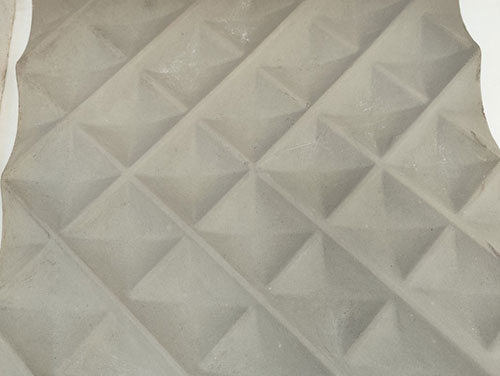
UHPC panels combine Portland cement, fine silica sand, silica fume, superplasticizers, and steel or polymer fibers. This composite achieves high density, low porosity, and resistance to chemical attack.
Panels are engineered for optimized load distribution, incorporating ribbing or honeycomb cores to reduce weight while maintaining structural integrity. Surface textures are integrated during casting or applied post-production through techniques like sandblasting or mold imprinting.
The process includes precise material batching, high-shear mixing, casting in textured molds, controlled curing under temperature and humidity conditions, and final surface finishing. Rigorous quality control ensures panels meet mechanical, dimensional, and visual specifications.
Material Consistency: Variations in cement, aggregates, or fibers can impact strength and durability.
Curing Conditions: Improper curing may cause shrinkage, surface cracking, or reduced performance.
Surface Finishing: Inconsistent textures or defects can affect aesthetics and water resistance.
Panel Thickness and Reinforcement: Incorrect design may lead to bending, warping, or failure under load.
Environmental Exposure: Panels must be selected for resistance to UV, freeze-thaw cycles, and chemical exposure based on project location.
Choosing a reliable supplier ensures the quality, consistency, and performance of UHPC texture panels:
Material Certification: Verification of cement, silica fume, and fiber quality.
Manufacturing Expertise: Capability to produce intricate textures and consistent panel dimensions.
Quality Control Protocols: Dimensional inspection, surface testing, and mechanical testing.
Project Support: Technical guidance on panel selection, installation, and maintenance.
Logistics and Packaging: Panels must be delivered safely to prevent surface damage or distortion.
High Initial Cost: UHPC panels are more expensive than traditional concrete, although life-cycle costs are lower due to durability.
Installation Complexity: Precise handling and specialized fixings are often required for textured panels.
Customization Limitations: Some suppliers may have limited mold options for highly intricate designs.
Environmental Sensitivity: Extreme temperature fluctuations or exposure to de-icing salts may affect long-term performance if panels are not properly engineered.
Maintenance of Surface Finish: Textured panels may require occasional cleaning to maintain visual appearance.
Architectural Facades: Textured panels enhance modern building exteriors with visual depth, shadow play, and pattern variation.
Interior Design: UHPC panels can serve as feature walls, reception areas, or decorative partitions with minimal maintenance.
Infrastructure Projects: Durable panels are suitable for bridges, tunnels, and public facilities exposed to harsh environments.
Commercial Buildings: Facades and cladding systems benefit from lightweight, high-strength panels that reduce structural load.
Urban Regeneration: Textured UHPC panels contribute to aesthetic upgrades in city centers, combining beauty with long-term performance.
Sustainability: Use of recycled aggregates and low-carbon binders is increasingly integrated into UHPC production.
Advanced Texturing Techniques: Digital molds, laser-etched patterns, and 3D-printed molds enable highly customizable finishes.
Lightweight Panel Designs: Optimized internal structures reduce weight while preserving strength and rigidity.
Smart Panel Integration: Sensors for structural health monitoring or embedded lighting elements are emerging applications.
Global Market Expansion: As demand for durable and visually appealing building materials grows, UHPC panels are gaining adoption in emerging markets worldwide.
1. What distinguishes UHPC texture panels from traditional concrete panels?
UHPC panels offer higher compressive strength, lower porosity, enhanced durability, and versatile surface textures compared to conventional concrete.
2. Can UHPC panels be customized for specific designs?
Yes, panels can be cast with varied textures, patterns, colors, and even integrated reinforcement according to project requirements.
3. How do UHPC panels perform under harsh weather conditions?
They demonstrate exceptional resistance to freeze-thaw cycles, UV radiation, and chemical exposure, ensuring long-term durability.
4. Are UHPC texture panels suitable for interior use?
Absolutely. They can be applied for decorative walls, partitions, or feature surfaces, combining aesthetics with structural integrity.
5. What maintenance is required for textured UHPC panels?
Routine cleaning and occasional inspection are typically sufficient, as the material is inherently resistant to staining and wear.
UHPC texture panels represent a significant advancement in modern construction materials, combining exceptional structural performance with versatile architectural design. Their strength, durability, and customizable surface finishes make them ideal for demanding industrial, commercial, and residential projects. By understanding material properties, manufacturing processes, and installation requirements, engineers and architects can leverage UHPC panels to achieve innovative, long-lasting, and visually compelling structures. As trends in sustainability, customization, and smart construction continue to evolve, UHPC texture panels are poised to play an increasingly prominent role in the future of architecture and infrastructure development.
This website uses cookies to ensure you get the best experience on our website.

 Español
 Portugues
 Pусский
 Français
 Deutsch
 日本語
日本語 한국어
한국어 العربية
 Italiano
 Polski
 Türk dili
 Melayu
 中文
中文 қазақ
қазақ עִברִית
 українська
 norsk
norsk o'zbek
 ଓଡିଆ
ଓଡିଆ



 Phone
Phone