
GRC/GFRC : Glass Fiber Reinforced Concrete
GRC (Glass Reinforced Concrete) is a fiber-reinforced cementitious material made primarily of alkali-resistant glass fiber, cement as the main gelling agent, and sand as aggregate, supplemented with admixtures. Sand acts as filler and skeleton in GRC, while glass fiber provides reinforcement.
Thin Walls and Lightweight: GRC has a density of around 2000 kg/m³, lighter than concrete, allowing for the creation of thin-walled components. Typically, GRC components have a wall thickness of around 15 mm, with the thickest less than 30 mm and the thinnest 5 mm. This thinness contributes to its lightweight nature. A 15 mm thick GRC component weighs only 30 kg per square meter, and even considering the weight of extensions and protruding embedded parts, it's no more than 50 kg. With a supporting steel frame, the total weight per square meter is still less than 100 kg.
Flexible Shaping: GRC components are molded in molds, and their lightweight nature allows for easy shaping, enabling the creation of various complex forms.
Diverse Simulations
Because GRC contains no coarse aggregates, it can delicately and accurately represent different textures and patterns. It can be made smooth as a mirror or rough like stone. Furthermore, with the addition of textured surface layers or combined with latex paint, fluorocarbon paint, etc., it can simulate various textures such as granite, sandstone, red brick, ceramic tile, wood, and metal.
Origins
GFRC (GLASS FIBER REINFORED CONCRETE), also known as GRC, is a composite material using cement mortar as the base material and alkali-resistant glass fiber as the reinforcing material. It also includes various additives for enhancing performance, as well as pigments. The manufacturing process of GFRC is quite unique. The prepared glass fiber concrete is sprayed onto a template, resulting in a delicate texture and ensuring excellent density, strength, and crack resistance. Products made in this way are vastly different in quality from ordinary concrete application. In Europe and America, single-layer GFRC thin panels are widely used exterior wall cladding.
Corrosion-Resistant GRC Textured Effect Wall Panels: Advancements and Applications in Modern Architecture
In the contemporary world of construction and architecture, the need for durable, high-performance materials that can withstand the elements while maintaining aesthetic appeal is increasingly important. Corrosion-resistant GRC textured effect wall panels have emerged as a popular choice for cladding, offering a combination of resilience and design flexibility. These panels, made from Glass Fiber Reinforced Concrete (GRC), offer significant advantages in terms of durability, aesthetic versatility, and low maintenance, making them ideal for use in both commercial and residential applications.
This article provides an in-depth exploration of corrosion-resistant GRC textured effect wall panels, focusing on the industry background, core technologies, performance characteristics, and manufacturing processes. It will also address factors that affect their quality, common challenges in the industry, and future trends.
The construction industry has always been focused on creating materials that can withstand harsh environments. With urbanization, industrialization, and climate change, the demand for construction materials that can endure extreme weather conditions, pollution, and other environmental factors has grown significantly. Corrosion-resistant materials are especially crucial in coastal, industrial, and high-humidity areas where traditional materials like steel or wood often deteriorate over time.
The growing demand for durable, sustainable, and aesthetically pleasing building materials has driven the development of advanced composite materials like Glass Fiber Reinforced Concrete (GRC). GRC textured effect wall panels, designed to replicate the appearance of natural materials like stone, brick, or wood, have found widespread use in both residential and commercial projects. These panels offer a cost-effective, low-maintenance, and long-lasting solution compared to traditional building materials.
In recent years, as sustainable and low-maintenance building solutions have become more important, GRC textured panels have gained traction. They are increasingly being adopted for projects that require durability, especially in areas where exposure to moisture, salt, and chemicals can rapidly degrade other materials. The corrosion resistance of GRC panels ensures that they maintain their structural and aesthetic integrity in harsh conditions, making them a popular choice for architects, engineers, and construction professionals.
The key technology behind GRC textured effect wall panels lies in the material itself—Glass Fiber Reinforced Concrete (GRC). GRC is a composite material made from a mixture of cement, fine aggregates, water, and alkali-resistant glass fibers. The glass fibers significantly enhance the tensile strength of the concrete, improving its ability to resist cracking, corrosion, and impact. This makes GRC an ideal material for cladding applications, where the panels need to be both durable and lightweight.
Textured effect refers to the surface finish applied to the GRC panels to create patterns, textures, or even the appearance of natural materials. The textured surface can be customized to resemble various finishes, such as stone, brick, or wood, allowing architects to create the aesthetic they desire while still benefiting from the structural advantages of GRC. Advanced manufacturing techniques, including mold casting and surface treatments, enable the production of highly detailed and realistic textures on GRC panels.
In addition to the basic materials, modern GRC panels are often treated with protective coatings that enhance their corrosion resistance, UV stability, and water resistance. These coatings ensure that the panels can withstand long-term exposure to weathering and environmental conditions without significant degradation, thus extending their service life.
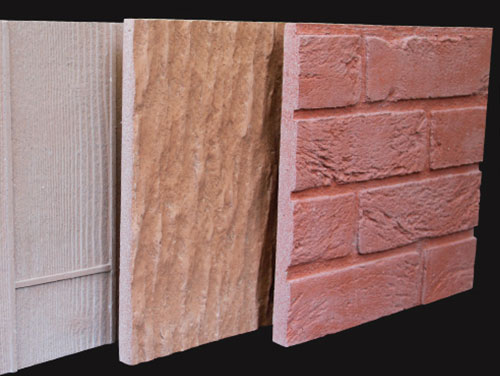
Corrosion-resistant GRC textured effect wall panels are typically composed of three main components:
Base Layer: The core of the panel consists of GRC, which includes cement, aggregates, and glass fibers. The base layer is responsible for providing the structural strength and durability of the panel. The glass fibers give the material enhanced toughness and resistance to cracking and impact, making it suitable for outdoor and high-stress applications.
Textured Surface Layer: The surface layer of the panel is where the aesthetic qualities are most pronounced. Through the use of advanced casting techniques, the panels can be molded to mimic the appearance of natural materials, such as granite, marble, or wood. The textured effect is achieved through detailed molding, followed by surface treatments that enhance the texture’s depth and realism. This layer not only provides a visual appeal but also adds to the panel’s ability to resist dirt and water absorption.
Protective Coating: To enhance the corrosion resistance, UV stability, and durability of the GRC panels, a protective coating is often applied. This coating serves as a barrier against moisture, pollution, and UV rays, ensuring that the panels maintain their appearance and structural integrity even after years of exposure to harsh environmental conditions.
The manufacturing process involves precise molding and curing of the GRC mixture in controlled environments. The panels are cast in molds to create the desired texture and finish, and then they undergo a curing process to ensure uniformity and strength. Once cured, the panels are tested for quality and performance before being shipped to the construction site.
The quality and performance of corrosion-resistant GRC textured effect wall panels are influenced by several factors:
Material Selection: The quality of the raw materials, including cement, aggregates, and glass fibers, directly affects the durability and performance of the panels. High-quality materials ensure that the panels are strong, durable, and resistant to environmental degradation.
Manufacturing Precision: The accuracy of the molding and casting process is crucial for achieving the desired texture and finish. Any inconsistencies in the molding process can result in defects, such as cracks or uneven surfaces, which can compromise the panel’s aesthetics and performance.
Surface Treatment: The type of protective coating applied to the surface of the panels plays a significant role in their long-term durability. A high-quality, corrosion-resistant coating ensures that the panels remain resistant to environmental factors, including UV rays, moisture, and air pollutants.
Installation Practices: Proper installation is essential to maintaining the integrity of the panels. Incorrect handling or improper fixing during installation can lead to surface damage, misalignment, or failure of the panels to perform as expected.
When selecting a supplier for corrosion-resistant GRC textured effect wall panels, several key criteria should be considered:
Reputation and Experience: Suppliers with a proven track record in manufacturing GRC products are more likely to provide high-quality panels that meet industry standards. Experience in producing textured GRC panels is particularly important for ensuring that the aesthetic finish meets expectations.
Customization and Design Flexibility: The ability to offer customized textures, colors, and finishes is essential for meeting the specific design requirements of each project. Suppliers that can work with architects and designers to create tailored solutions are highly valued.
Quality Assurance and Certifications: Suppliers should adhere to international standards and certifications to ensure the panels’ durability and performance. Certifications such as ISO 9001 for quality management and ISO 14001 for environmental management can indicate that the supplier follows best practices in production.
Logistics and Delivery: Reliable logistics are crucial for ensuring that the panels are delivered on time and in good condition. Suppliers with efficient delivery systems can help reduce delays and prevent damage during transit.
While corrosion-resistant GRC textured effect wall panels offer many benefits, several challenges persist:
Installation Complexity: GRC panels require careful handling during installation to prevent damage to the surface or texture. Incorrect installation can lead to cracking, misalignment, or poor adhesion, which may affect the long-term performance of the panels.
Cost Considerations: While GRC panels offer significant long-term benefits, the initial cost of purchasing and installing the panels may be higher compared to traditional materials. However, the durability and low maintenance requirements of GRC panels often make them a cost-effective solution in the long run.
Surface Maintenance: Though GRC panels are highly durable, they may still require periodic cleaning and maintenance to remove dirt and stains. In coastal or industrial areas, additional treatments or coatings may be necessary to prevent the buildup of corrosive substances.
Corrosion-resistant GRC textured effect wall panels are highly versatile and can be used in a wide range of applications, including:
Building Facades: These panels are ideal for exterior cladding, providing an aesthetically pleasing and durable solution for both residential and commercial buildings. Their ability to withstand harsh weather conditions makes them particularly suited for coastal and industrial environments.
Interior Wall Cladding: GRC textured effect panels can also be used for interior applications, such as feature walls, partitions, and accent walls. Their customizable textures and finishes allow architects to create unique interior designs with a modern, industrial feel.
Public Spaces and Institutions: Due to their corrosion resistance and durability, these panels are often used in public spaces like airports, shopping malls, and government buildings, where high traffic and environmental exposure require robust materials.
The future of GRC textured effect wall panels looks promising, driven by advancements in material science and growing demand for sustainable, durable building materials. As architectural trends continue to favor modern, minimalist designs, the need for versatile cladding materials will increase. Additionally, with the focus on sustainability, GRC panels are likely to play an important role in green building initiatives, as they can be produced with minimal environmental impact and have a long service life.
Corrosion-resistant GRC textured effect wall panels offer an ideal solution for modern construction projects that demand both durability and aesthetic appeal. Their ability to resist harsh environmental conditions, combined with the versatility in design, makes them a popular choice for a wide range of applications. As construction demands continue to evolve, GRC textured panels are poised to become an integral part of the architectural landscape, offering a sustainable and cost-effective solution for the buildings of the future.
This website uses cookies to ensure you get the best experience on our website.

 Español
 Portugues
 Pусский
 Français
 Deutsch
 日本語
日本語 한국어
한국어 العربية
 Italiano
 Polski
 Türk dili
 Melayu
 中文
中文 қазақ
қазақ עִברִית
 українська
 norsk
norsk o'zbek
 ଓଡିଆ
ଓଡିଆ



 Phone
Phone